
Sunderland AFC fans have enjoyed watching an array of legends grace Roker Park and the Stadium of Light down the years.
Icons of the game have often turned out in red and white since the early days in the history of Sunderland as a club. Phillips cemented his status as a Black Cats legend after firing them into the Premier League. His Golden Boot-worthy days also kept Sunderland in the top flight.
Legendary strikers are synonymous with Sunderland. Kevin Phillips is just one of the latest to forge his name in Stadium of Light folklore. While the likes of Bobby Gurney made Roker Park roar for several years. So, with that in mind, here are the top 10 Sunderland legends of all time…
Kevin Phillips

| Position: | Centre-forward |
| Appearances: | 235 |
| Goals: | 130 |
| Managers: | Peter Reid (1997-2002), Howard Wilkinson (2002-03), Mick McCarthy (2003) |
| Years at Sunderland AFC: | 1997-2003 |
Peter Reid signed Phillips while he was the manager of Sunderland in 1997. Phillips arrived on Wearside from Watford on the back of the Black Cats’ relegation from the Premier League. Phillips had cut his teeth at Vicarage Road over the three terms previous but only really found his feet when he travelled to the northeast.
Phillips scored 35 goals in all competitions during his first season at the Stadium of Light, before a further 23 in 26 Division One games fired Sunderland to the 1998/99 title the following year. Then came his most famous campaign with Sunderland, netting a stunning 30 goals to guide the club to a shock seventh-place finish in the Premier League.
In netting 30, Phillips won both the Premier League Golden Boot and the European Golden Shoe – awarded to the top-scoring player across Europe.
He was the first English player to win the European Golden Shoe.
Niall Quinn

| Position: | Centre-forward |
| Appearances: | 218 |
| Goals: | 67 |
| Managers: | Peter Reid (1996-2002), Howard Wilkinson (2002-03), Mick McCarthy (2003) |
| Years at Sunderland AFC: | 1996-2003 |
Sunderland enjoyed one of the greatest little-and-large strike partnerships in English football history at the turn of the 21st century. Niall Quinn regularly worked wonders on Wearside as part of a formidable partnership with Phillips. He also moved upstairs upon retiring in 2003.
Expectations were that Quinn was coming to the end of his career when Arsenal sold him to Manchester City in 1990. Yet six years later, Sunderland spent a club record £1.3m on Quinn. He also scored a brace on his Black Cats debut at Nottingham Forest before an injury struck.
Quinn missed months due to a knee injury and Sunderland struggled en route to relegation. But the arrival of Phillips brought about their revival, and his. Quinn scored 18 goals as they swept the Division One title. He then hit home 14 times in 37 games in the Premier League.
The Stadium of Light owes Quinn for a slice of its history, too, as he scored the first goal in Sunderland’s new home. Quinn broke the deadlock in Sunderland’s first league game at the ground to help inspire a 3-1 win over Manchester City.
He later returned to the club in 2006 to head a consortium as it became Sunderland’s owners and he took over as their chairman.
Bobby Gurney
| Position: | Centre-forward |
| Appearances: | 388 |
| Goals: | 228 |
| Managers: | Bob Kyle (1925-28), Johnny Cochrane (1928-39) |
| Years at Sunderland AFC: | 1925-39 |
Sunderland legend Bobby Gurney is the greatest goalscorer in the Black Cats’ history. The local lad wrote his name in the foundations of Roker Park with a club-record 228 goals in 388 outings.
Gurney’s goals fired the Wearside club to the 1935/36 Division One title, Sunderland’s most recent top-flight honour. He scored 31 times that term, including hitting four on the day the title was confirmed – it was one of three trophies the striker helped the Black Cats to secure.
His goals also took the Black Cats to their first FA Cup title in 1936/37. Gurney even scored Sunderland’s first Wembley goal to equalise in the final with Preston North End en-route to a 3-1 win.
Sunderland named Gurney in their Hall of Fame in May 2019.
Charlie Hurley

| Position: | Centre-back |
| Appearances: | 400 |
| Goals: | 26 |
| Managers: | Alan Brown (1957-64), George Hardwick (caretaker, 1964-65), Ian McColl (1965-68), Alan Brown (1968-69) |
| Years at Sunderland AFC: | 1957-1969 |
Charlie Hurley is another member of Sunderland’s Hall of Fame Class of 2019. The defender was the captain of the Black Cats’ debut promotion-winning squad in 1963/64, earning the nickname ‘The King’ for his heroic leadership of the club down the years.
The admiration that Sunderland’s supporters held for Hurley was so strong, in fact, that they voted him as the club’s Player of the Century in 1979. The centre-half was a formidable force at Roker Park in the late 1960s.
Hurley was a defender well ahead of his time and set the trend for centre-halves going up to attack corners. Many consider the devastating efforts he displayed in opponents’ areas to be the foundations for the theme that is simply commonplace within the modern game today.
Jimmy Montgomery
| Position: | Goalkeeper |
| Appearances: | 627 |
| Goals: | 0 |
| Managers: | Alan Brown (1960-64), Alan Brown (caretaker, 1964-65), Ian McColl (1965-68), Alan Brown (1968-72), Billy Elliott (caretaker, 1972), Bob Stokoe (1972-76), Ian MacFarlane (caretaker, 1976), Jimmy Adamson (1976-77) |
| Years at Sunderland AFC: | 1960-1977 |
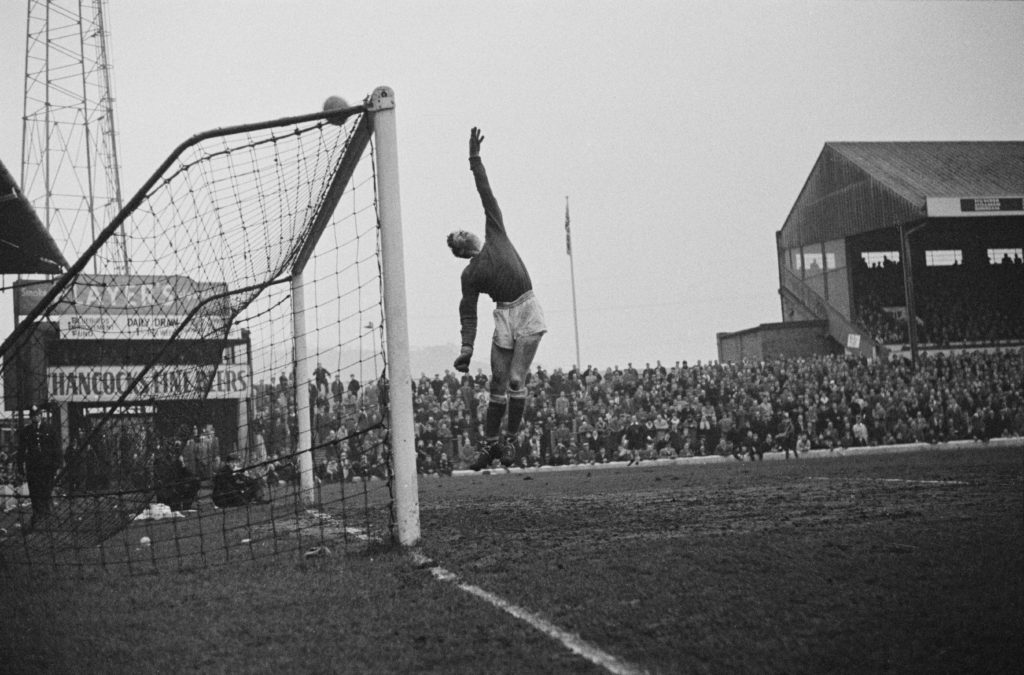
Sunderland named Jimmy Montgomery to their Hall of Fame in 2019 to honour their record appearance maker. The goalkeeper played 627 games between the sticks between his debut in 1960 to his departure in 1977. He carried on playing up until 1980 before becoming a coach.
Montgomery emerged at the age of 18 to debut for his hometown team against Walsall. The shot-stopper, who even received a BEM for services to football in the Queen’s 2015 birthday honours list, was born in Hendon in the eastern area of Sunderland during October of 1943.
His hands helped Sunderland lift silverware, too, with Montgomery keeping a clean sheet in the 1973 FA Cup final as the Black Cats shockingly beat Leeds United at Wembley Stadium.
His superb double save to deny Trevor Cherry and Peter Lorimer in the final is one of the most famous moments in the club’s history.
Charlie Buchan
| Position: | Centre-forward |
| Appearances: | 413 |
| Goals: | 209 |
| Managers: | Bob Kyle (1910-25) |
| Years at Sunderland AFC: | 1910-1925 |
As well as helping Sunderland discover a Hall of Fame player in Gurney, fellow Class of 2019 hero Charlie Buchan is a Black Cats legend in his own right. The centre-forward scored 209 times in 413 games over a 15-year spell on Wearside, including 30 in their iconic 1912/13 campaign.
Buchan hit 27 goals to help Sunderland win the Division One title and bagged another three to reach the FA Cup final. His efforts included scoring in their quarter-final against Newcastle United and semi-final against Burnley.
Iconic Black Cats coach Bob Kyle first fielded Buchan as an inside forward before playing him as a striker. It would prove to be a masterful decision as Buchan would go on to net a boatload of goals for the club – even finishing as top scorer in 1914/15 and 1923/24.
Buchan’s legend in the game also continued once he left Sunderland to return to Arsenal. He returned to north London aged 34 under Herbert Chapman having left as a teen. Yet despite his age, Buchan captained Arsenal to their first FA Cup final in 1927.
After the forward hung up his boots, he became a co-founder of the Football Writers’ Association.
Bobby Kerr
| Position: | Midfielder |
| Appearances: | 413 |
| Goals: | 67 |
| Managers: | Ian McColl (1966-68), Ian McColl (1968-72), Alan Brown (caretaker, 1972), Billy Elliott (1972-76), Ian MacFarlane (caretaker 1976), Ian MacFarlane (1976-78), David Merrington (caretaker, 1978), Billy Elliott (1978-79) |
| Years at Sunderland AFC: | 1966-1979 |
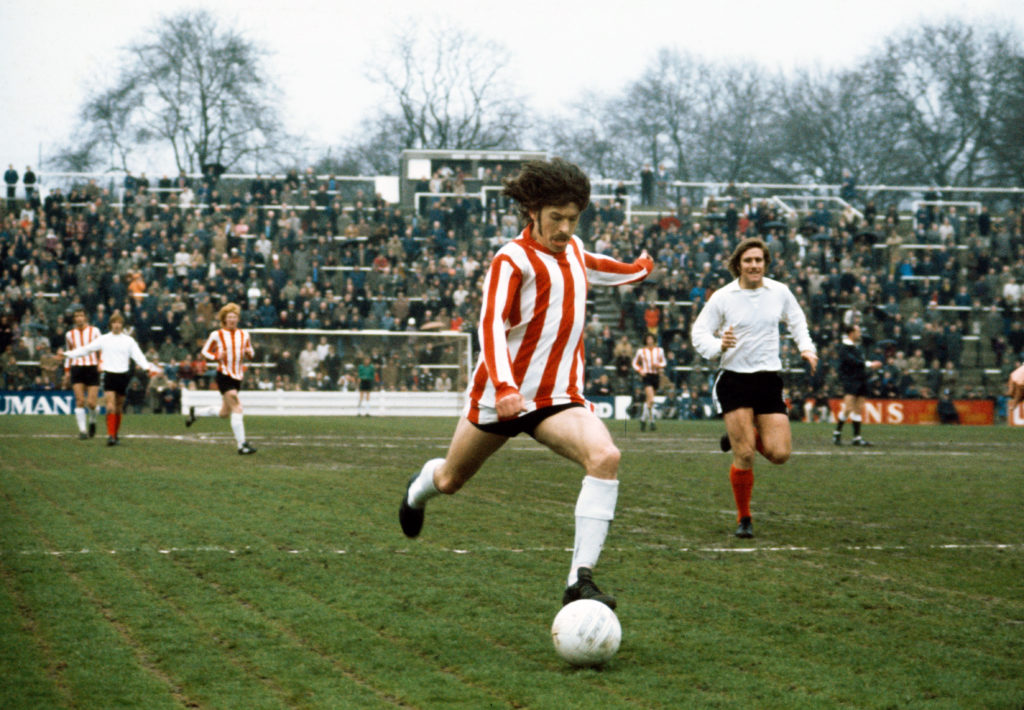
Bob Stokoe dubbed Bobby Kerr as the ‘Little General’ at Roker Park, and considering he is the smallest man to ever captain an FA Cup-winning side, the nicknames makes a lot of sense.
Kerr was the leader of the Sunderland side that beat Leeds in the 1973 FA Cup final. It came seven years after his sprightly emergence in the northeast. The Scot burst into the game in 1966/67 with seven goals in 10 games. His run even included a brace to beat Newcastle 3-0.
But the high of Kerr’s career on Wearside came in the 1973 FA Cup final.
Stokoe would later prise Kerr away from Sunderland in 1979 after returning to Blackpool. He adored the leadership the Alexandria native offered his Black Cats sides. The boss gave Kerr his nickname given the legend’s tactical know-how, big heart, bravery and all-round abilities.
Kevin Ball

| Position: | Centre-back, midfielder |
| Appearances: | 389 |
| Goals: | 27 |
| Managers: | Denis Smith (1990-91), Malcolm Crosby (1991-93), Terry Butcher (1993), Mick Buxton (1993-95), Peter Reid (1995-99) |
| Years at Sunderland AFC: | 1990-1999 |
Kevin Ball cost Sunderland £350k in 1990, and it proved to be money well spent. Bal went on to feature nearly 400 times for the Wearside club, in which they also won promotion to the Premier League twice. They also reached an FA Cup final in 1992.
Such was the brilliance that Sunderland recognised Ball as their Player of the Year in 1990/91, 92/93, 94/95 and 96/97. He even returned to Wearside under Mick McCarthy in 2003 as part of Sunderland’s coaching staff before helping their academy.
Ball oversaw the progress of several future first-team players, including Jordan Pickford, with Sunderland’s academy. His time with their Under-18 and Under-21 sides further led Ball to step in as the first-team’s caretaker manager in 2006 and 2013. He also held an ambassadorial role for a period.
Dave Halliday
| Position: | Centre-forward |
| Appearances: | 175 |
| Goals: | 165 |
| Managers: | Bob Kyle (1925-28), Johnny Cochrane (1928-29) |
| Years at Sunderland AFC: | 1925-1929 |
Dave Halliday may have only played 175 times at the Black Cats between 1925 and 1929, yet he cemented his legacy as a Sunderland legend with an incredible haul of 165 goals.
The striker regularly scored goals in his native Scotland in the early part of his career, bagging 38 during the 1923/24 season alone with Dundee. His 19 in 1924/25 led to his switch to Sunderland, where he’d continue to find the net with regularity.
Halliday set a long-held record as the fastest player to reach 100 English top-flight goals in just 101 games. He even scored at least 35 goals in each of the attacker’s four league terms at Sunderland from 1925 to 1929. Only Dixie Dean could rival his career goals-to-game ratio.
Jermain Defoe
| Position: | Centre-forward |
| Appearances: | 100 |
| Goals: | 37 |
| Managers: | Gus Poyet (2015), Dick Advocaat (2015), Sam Allardyce (2015-16), David Moyes (2016-17), Mike Dodds (caretaker, 2022), Alex Neil (2022) |
| Years at Sunderland AFC: | 2015-2017, 2022 |
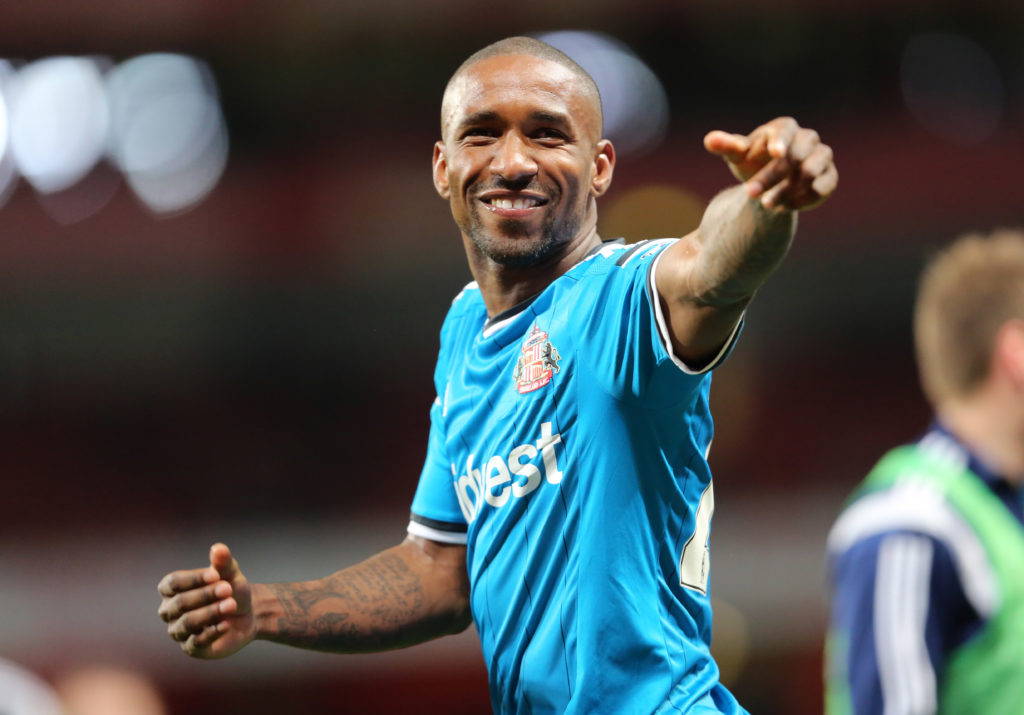
Jermain Defoe proved to be a Sunderland legend in every sense of the word after moving to the Stadium of Light. He gave the Black Cats the heroic centre-forward they lacked since the days of Phillips and Quinn.
The striker was already a Premier League hero from spells for West Ham United, Tottenham Hotspur and Portsmouth. He also enjoyed a spell in Canada with Toronto before agreeing to sign for Sunderland. Defoe returned to England having missed being in the Premier League.
Sunderland gave Defoe a heavily incentivised contract to secure his services in a swap deal for Jozy Altidore. But he embraced everything about the Black Cats and was their saviour in 2015/16 with 15 crucial goals to avoid relegation, including sealing a vital win over Chelsea.
He continued to score important goals the season after, but this time his tally of 14 could not prevent relegation to the Championship.
AFC Bournemouth moved to secure Defoe’s signature following Sunderland’s relegation. It was only an interruption in his Black Cats career, though, as he returned in January 2022 after leaving Rangers.
During his time at Sunderland, Defoe forged a special relationship with the fans, notably young Black Cats fan Bradley Lowery.